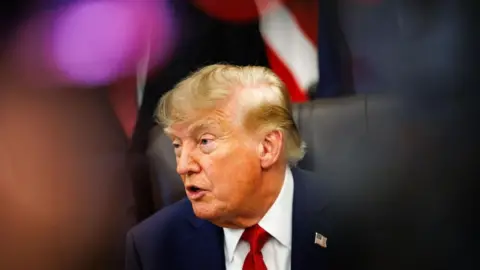
President Cyril Ramaphosa wagered South Africa’s well-being on what he perceived to be President Donald Trump’s butterfly attention span. He lost the wager and the concern should be that he may now double down.
There is more to that wager than a potentially ruinous misjudgment of an erratic American president. Drawing on the Marxist-Leninist concept of the ‘balance of forces’, the ANC treats concessions to neoliberal, reactionary or imperialist forces — whether that is admitting the DA into the Government of National Unity or accommodating the concerns of the United States — as temporary tactical adjustments. They are not negotiated changes of policy or destination, but expedient retreats along the rocky yet inexorable road to the National Democratic Revolution.
This week US Ambassador Brent Bozell spoke with unusual candour to Alec Hogg of BizNews about 18 months of deteriorating relations and what the US views as foot-dragging by Ramaphosa and his outspokenly anti-American Foreign Minister Ronald Lamola over the issues bedevilling the relationship between the two countries. Pretoria responded with the curious assertion that it had ‘acceded to all the requests in our mind’, although perhaps not ‘in the language’ or time frame Washington demanded.
There were two negotiating stages in play.
The first five domestic ‘asks’, in US parlance, or ‘demands’, in the ANC’s, involved alleged discrimination, incitement and violence against racial minorities generally and Afrikaners specifically, especially in rural communities; and Black Economic Empowerment requirements which, together with the Expropriation Act, Washington regarded as impediments to US investment here.
Far from impugning South Africa’s sovereignty in any fundamental way, as the ANC and much of the commentariat insist, these are legitimate matters of US concern, since they define the human rights and financial environment into which US investments would be made. And, by any disinterested assessment, they are laughably easy to resolve.
A further set of eight geopolitical issues, to be negotiated later, concerned South African actions or positions which Washington viewed as hostile to US interests or those of its allies, specifically but not only Israel. These do indeed touch on South Africa’s sovereign foreign-policy choices, but in the run-of-the-mill manner — the mutual nudging, pushing and shoving by which nations protect their interests and advance their causes — that is the everyday stuff of diplomacy.
Bozell says that the five ‘asks’ were relatively uncontroversial threshold issues to be cleared before the more difficult bargaining began. Bozell told Hogg Pretoria would eventually look back at the five and conclude that they were ‘so damn easy’ and that two — specifically, the refugee programme, which Pretoria had agreed not to impede, and the Expropriation Act, now under judicial review — were already settled.
Talks on the meatier geopolitical issues had already begun, said Bozell. Two, the US believed, were already resolved; another four appeared to be moving towards resolution. The last two — he cites Israel as an example — would be harder and would require genuine ‘give and take’. ‘That’s how close we came,’ Bozell told Hogg.
So, what are the three apparently outrageous intrusions on South African sovereignty upon which the negotiations floundered?
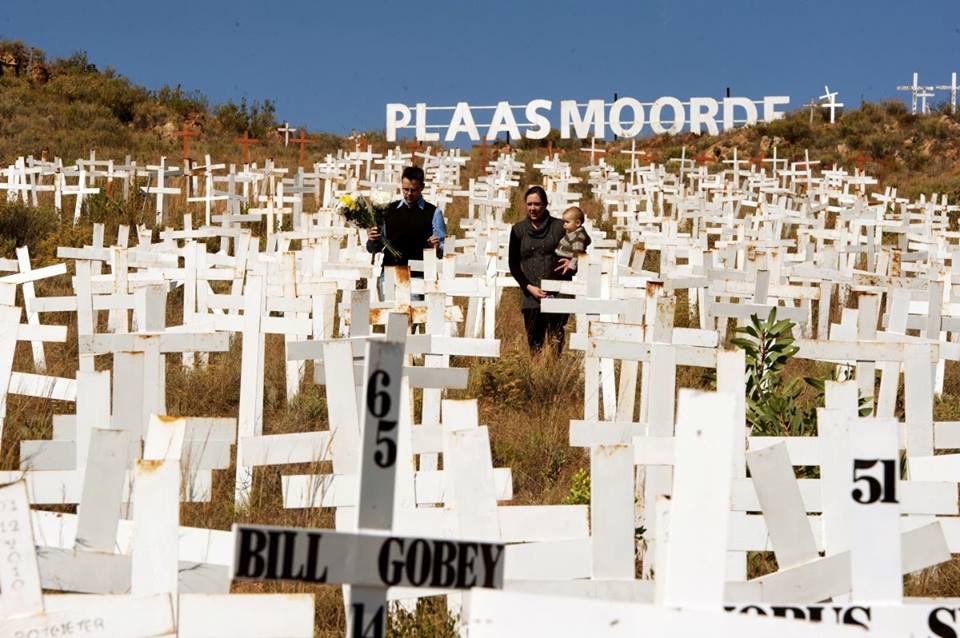
The first was that Ramaphosa condemned the ‘Kill the Boer, Kill the Farmer’ chant as incitement to violence. Importantly, Bozell says Washington expressly offered him the politically easier option of condemning ALL racial incitement, from whatever quarter, rather than singling out only anti-Afrikaner/farmer rhetoric.
The second concerned rural crime, which the US wanted South Africa to designate a priority crime and to do more operationally about. Again, Bozell’s formulation is undramatic. ‘I don’t care if you call five things priority crimes,’ he says. ‘Just call this one a priority crime.’
Nor was Washington dictating what the intervention should be. Bozell says he presented Ramaphosa with several possibilities: a technology-based security initiative; cooperation with AfriForum, which has implemented a highly effective rural safety plan; or simply implementation of South Africa’s own existing rural-safety plan. As a sweetener, the US would assist: ‘Just do your own plan,’ he relates telling Ramaphosa, ‘and if it makes sense, we’ll help fund it.’
The third was BEE. Here again the US demand, according to Bozell, was modest. The US was not demanding the abolition of BEE, but wanted South Africa to extend to mining and telecommunications the equity-equivalent investment alternatives already available in other sectors.
He says Pretoria responded that regulatory and legislative obstacles meant telecommunications reform could take two years, while the mining portfolio presented ‘political difficulties’, with a minister ‘who hates the West’. Washington’s response was effectively: find a way.
‘The bottom line is it was so simple,’ Bozell tells Hogg. ‘Kill the Boer, the rural farms support and BBBEE alternatives. So simple. They couldn’t give us one of them. Not one of them.’
Pretoria, in turn, disputes the suggestion that it had just refused to act. It says these are not matters South Africa is avoiding but matters that have to be addressed through constitutional processes.
Bozell says that after meeting Trump and Secretary of State Marco Rubio in Washington in August, he returned with the message that the US ‘had lost patience’. He met Ramaphosa and went through the five asks ‘word by word’. Two, as noted, were already dealt with. On the remaining three — racist chants, rural crime prioritisation and BEE — Washington wanted definite answers.
Ramaphosa objected to being given a deadline. Bozell says he could understand why. Nevertheless, the deadline was 15 days. ‘The time for talk was over,’ he says.
On the fifteenth day a six-page letter from Ramaphosa arrived. Bozell’s verdict on it was withering: ‘Very eloquent prose, but not one of the asks was answered correctly.’ Washington concluded, he says, that Pretoria did not want the relationship badly enough to make decisions.
Alistair Ruiters, Ramaphosa’s special adviser and a key negotiator with the US, describes the same exchange very differently. Pretoria says the Ramaphosa letter was ‘not a rejection and not a refusal’. Yet Trump did not reply. Instead came targeted visa restrictions and increasingly hostile public comments from Bozell. ‘Are you trying to resolve this issue or are you trying to escalate this issue?’ Ruiters asks.
Asked by Hogg why Pretoria had allowed matters to reach this point, Bozell says the ‘head-scratching continues’ in the US camp. ‘The asks were in black and white. There was no wiggle room … I think they thought that we were bluffing.’
Here is where the ANC’s ‘balance of forces’ approach comes into play. For Washington, negotiation was a route to a settlement. For Pretoria, it was merely a tactic for delaying, ad infinitum, politically and ideologically unpalatable compromises until one day, like the Great Rapture, the National Democratic Revolution would descend upon us.
Hogg put the proposition directly to Bozell, that the ANC was attempting to hold out until Trump left the White House, after which it expected relations with the US to improve.
Bozell was circumspect in his reply.‘You do hear that the government thinks they can run out the clock … and that in the post-Trump era, happy days will be here again.’ But, Bozell warned, it was important to understand that dissatisfaction with South Africa had not begun with Trump. The Biden administration had also experienced growing tensions with Pretoria, while Democratic legislators had raised concerns.
There is nothing intrinsically foolish about the ANC’s balance-of-forces strategy. Every political actor adjusts tactics to relative strength. But the ANC’s approach is not simply about South Africa navigating to its best advantage between the US and its allies on the one hand, and China, Russia, Iran and their allies on the other. Instead, it rests on the conviction that the historical, cultural and philosophical ties binding South Africa to the West are shackles to be broken.
‘You do hear that the government thinks they can run out the clock … and that in the post-Trump era, happy days will be here again’
Ambassador Brent Bozell
For now, everything is off the table, and discussions are over. It is now, Bozell says, up to Pretoria to return with new proposals demonstrating that South Africa wants a broader partnership.
The tragedy is that both sides still profess to want the same economic outcome — more US investment — but cannot agree on the path to get there. Bozell points to the 500–600 American companies operating in South Africa, supporting roughly 250,000 jobs. Why, he asks, could those numbers not double? Ruiters says explicitly that the last thing government wants is ‘job losses, loss of trade, loss of investments’.
The question is whether the ANC, relying on a political grammar honed over generations, has misread the balance of forces — mistaking unpredictability and volatility for weakness and a lack of resolve, and the prospect of political change in Washington for a reason to delay when settlement was still cheap.
If so, the irony is profound. A movement schooled for half a century in the discipline of waiting for the right moment may have waited until the moment passed.
Follow WSM on X @TheJaundicedEye