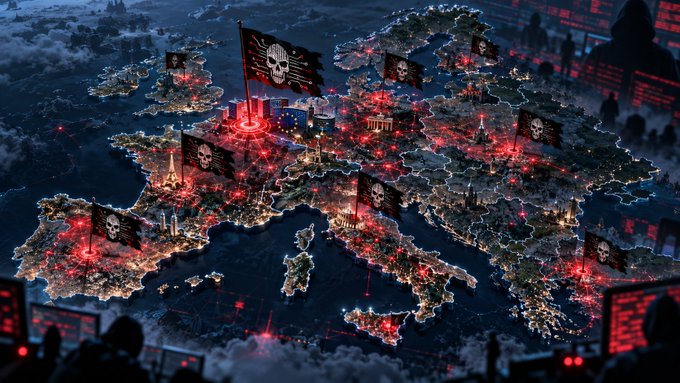
Most Western democracies have been hacked. Not with code. With institutional architecture. Let me show you how it works, using the most advanced example: the European Union.
First, how it works. Once every five years, you vote for a European Parliament that cannot even initiate legislation. The body that proposes laws is the Commission: 27 commissioners nobody elected, appointed after backroom bargaining between heads of state. Bills are then negotiated between the Commission, Parliament and Council in “trilogues”, closed-door meetings where the real decisions get made. A law that will apply to 450 million people goes through corridors that 99.9% of them will never see.
Now look at who’s in those corridors. Brussels has become the lobbying capital of the world: nearly 18,000 organizations on the transparency register, tens of thousands of lobbyists, more than 50 for every single MEP. And that’s just the declared part. Add the revolving door: a former MEP only has to wait six months before becoming a lobbyist to the EU himself.
The real problem is distance. A national MP who votes for a law that ruins the farmers in his district runs into them at the market on Saturday. In Brussels, the decision-maker never meets the people who live with his decisions. But he meets lobbyists every day: at lunch, at cocktails, at conferences. So the system doesn’t optimize for the wellbeing of the people. It optimizes for the interests of whoever is in the room. You don’t even need corruption for that, incentives are enough. Although sometimes, as Qatargate showed, there’s corruption too.
The result: the system has a structural incentive to accept things the people would never vote for.
Take Mercosur. Twenty-five years of negotiations. France votes against it in the Council in January 2026 and gets outvoted. To keep national parliaments from blocking it, the Commission splits the deal into two texts, including a trade agreement that only needs a vote in Brussels. The European Parliament itself writes, in black and white, that this split circumvents the right of national parliaments, and refers the deal to the EU Court of Justice. The Commission’s response: it has been applying the agreement provisionally since May 1, 2026, without waiting for the Court’s opinion. Farmers were protesting outside Parliament. They lost anyway.
And remember the one time the people were actually asked about Europe directly: in 2005, France and the Netherlands rejected the European Constitution. The text came back two years later as the Lisbon Treaty, ratified by parliaments. No more referendums.
But the worst of it is immigration. In 2015, relocation quotas were imposed by qualified majority on countries that had voted against them. Since June 12, 2026, the Pact on Migration and Asylum applies across the entire Union, with its “mandatory solidarity” mechanism: you take people in, or you pay. Not a single European people has ever been consulted directly on this, even though it’s the issue that is transforming our societies most profoundly.
And this is where we have to talk about the most sophisticated piece of the machine: George Soros.

Soros understood before anyone else that you don’t need to win elections if you shape the ecosystem around the people who make decisions. His network, the Open Society Foundations, describes itself as the largest private funder of advocacy groups in the world. In Brussels, it runs its own lobbying arm aimed at EU institutions, the Open Society European Policy Institute.
Here’s what we know from internal documents leaked in 2016: a document titled “Reliable allies in the European Parliament” listed more than 200 MEPs. Strategy papers described building “inside-track groups” to caucus “internal allies” who could advance their goals in their daily work. Training sessions were organized for MEPs on how to counter so-called populist parties.
The mechanism is brutally elegant. Think tanks produce the “expertise”. NGOs produce the “demand from civil society”. Legal NGOs litigate in the courts. Funded media outlets produce the narrative. The Brussels decision-maker, cut off from the population, hears the same message from every direction and ends up believing that this is what people want.
And the craziest part: the institutions fund the loop themselves. Between 2021 and 2023, the EU paid around €7.4 billion to NGOs, and the European Court of Auditors found the use of that money insufficiently transparent. It even came out that the Commission had funded NGOs to lobby MEPs in favor of its own Green Deal legislation. The institution pays “civil society” to ask it to do what it already wanted to do.
All of this is legal. That’s exactly what makes it a hack and not a crime. The system works exactly as designed, except nobody designed it for the people anymore.
The patch is simple to state and hard to impose: bring decisions back closer to the people who bear them, hold referendums on issues that change a civilization, create a mandatory register for every influence actor, NGOs included, with their funding sources, and shut the revolving door. Until that happens, European democracy will remain what it has become: a user interface sitting on top of a system that runs for someone else.